Learn
Planting for Pollinators
Tips for Creating Pollinator Habitat
Aim for long bloom times
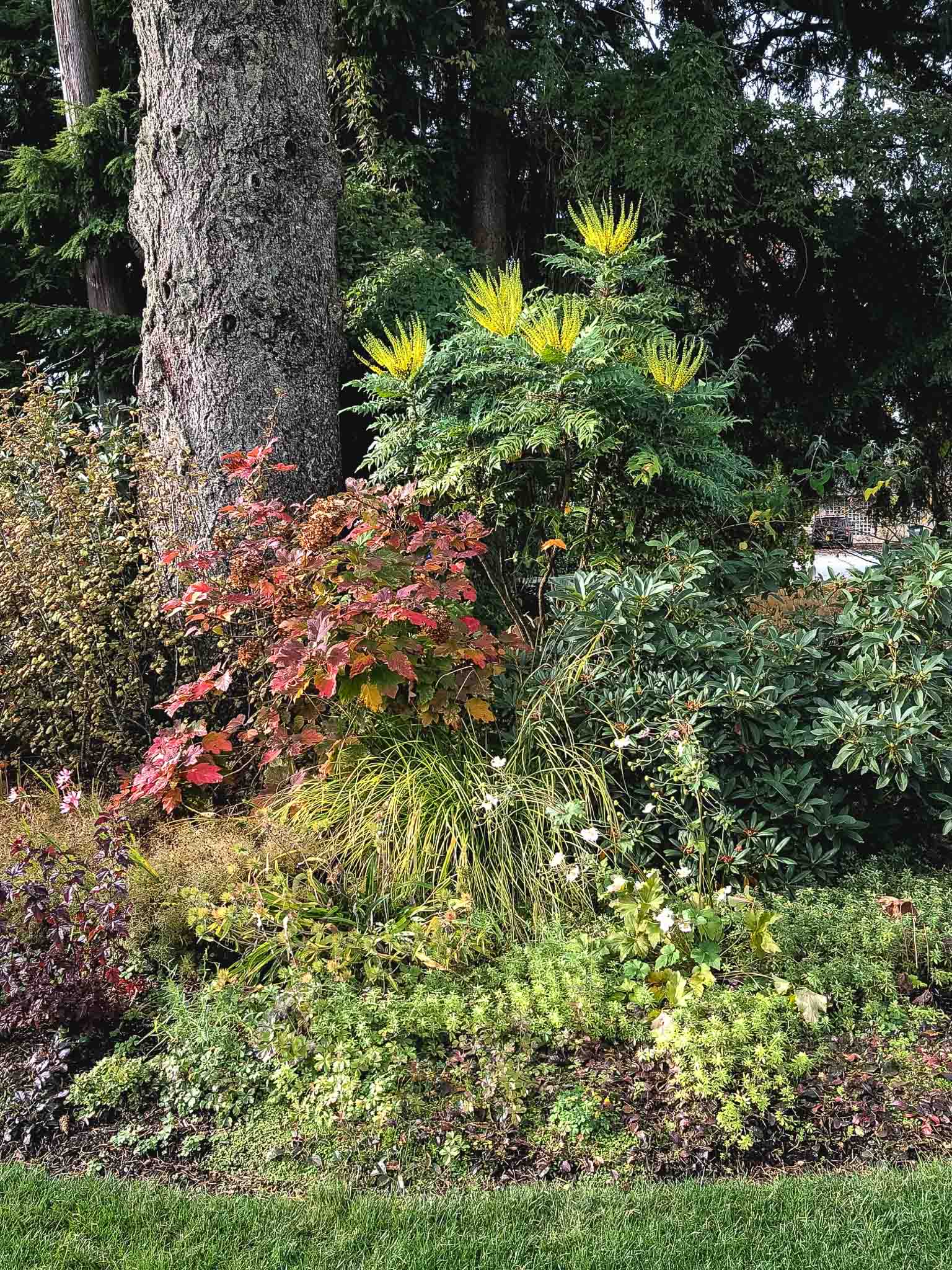
Aim for long bloom times; early spring is especially important! The majority of our bee species are active in spring time.
Image: Mahonia x media ‘Charity’ blooms in winter, supporting hummingbirds and early-emerging bees.
Plant with lots of variation
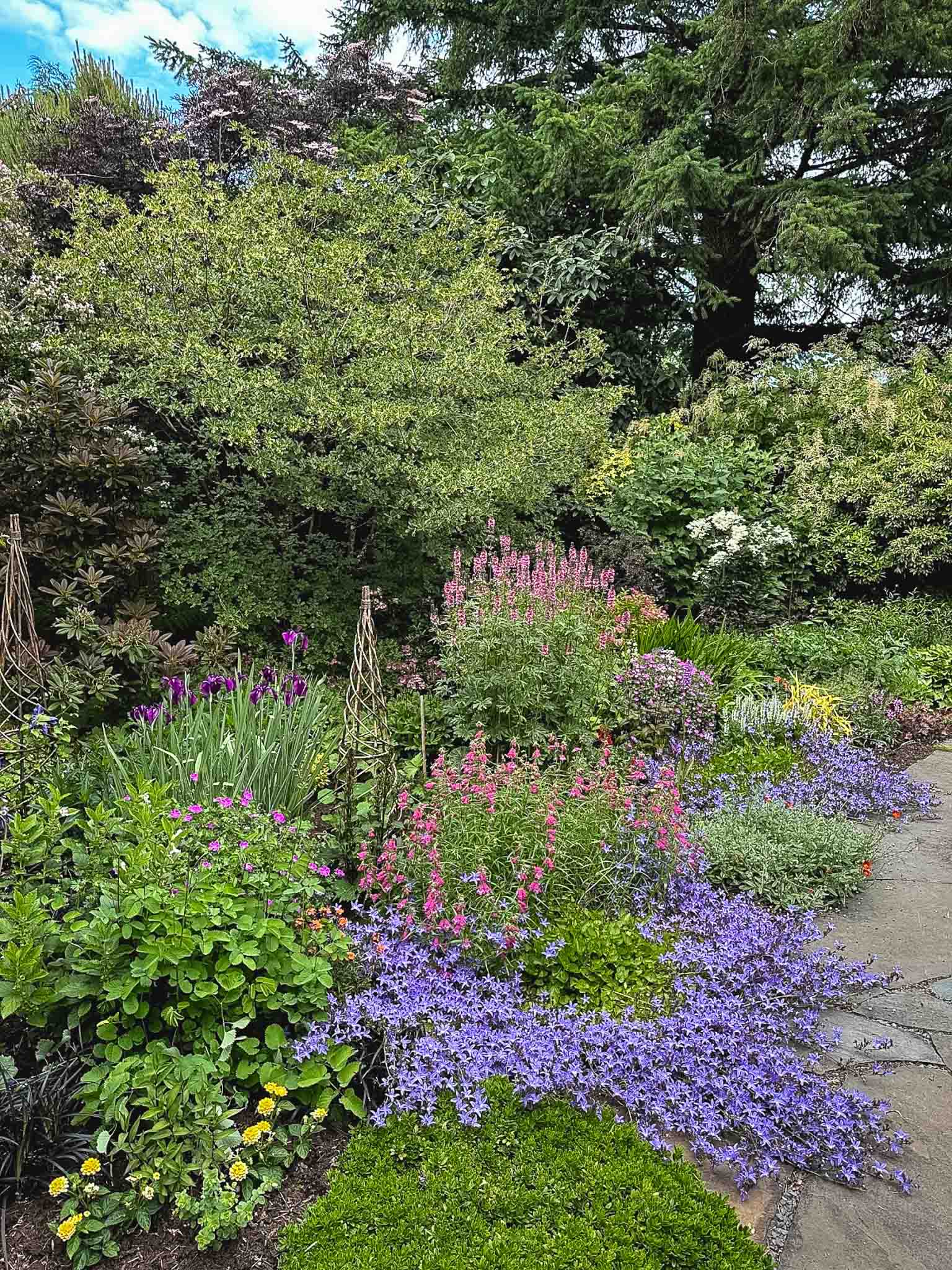
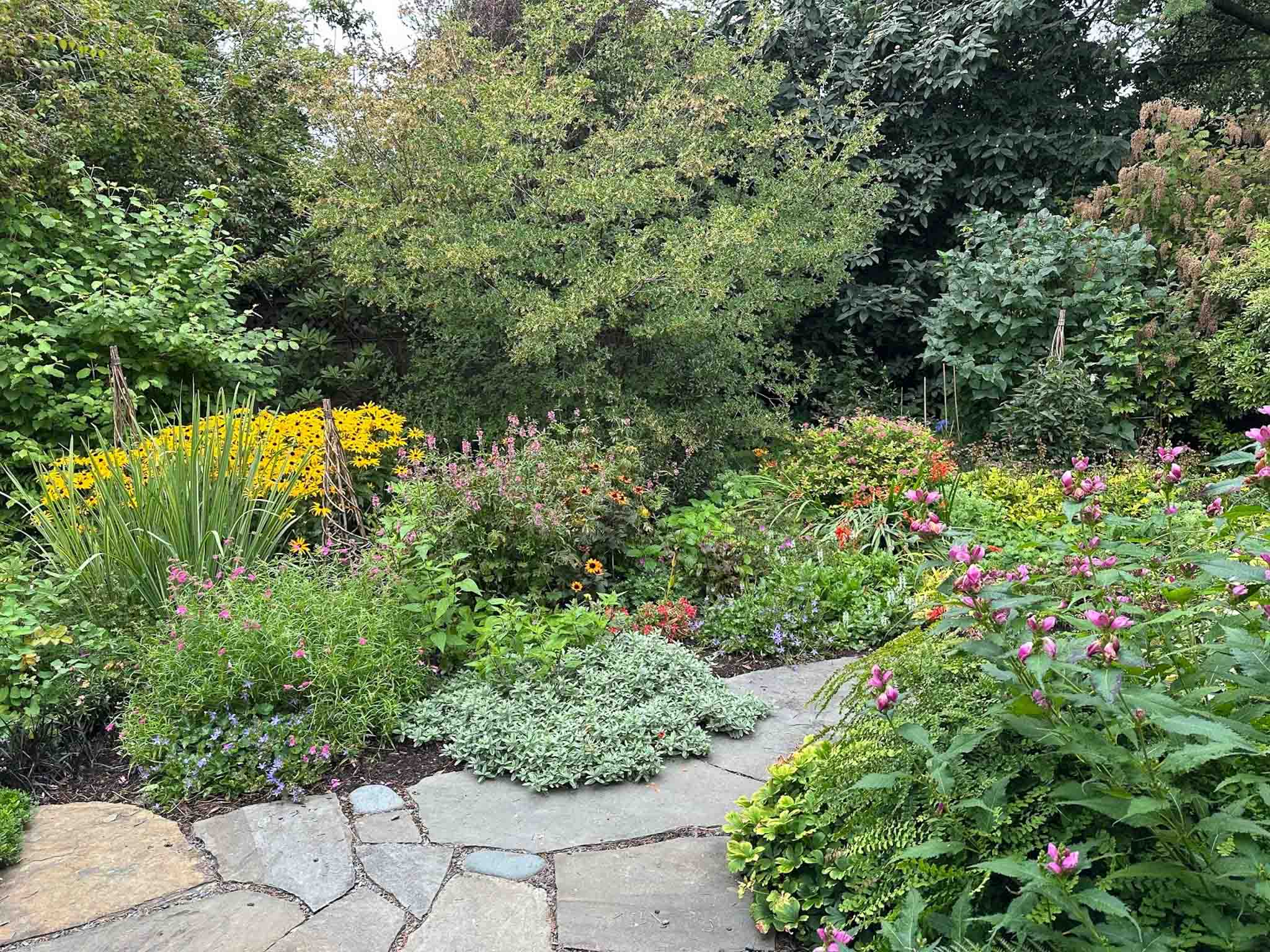
Offer lots of variation in shape, size, and colour—this attracts lots of variation in pollinators.
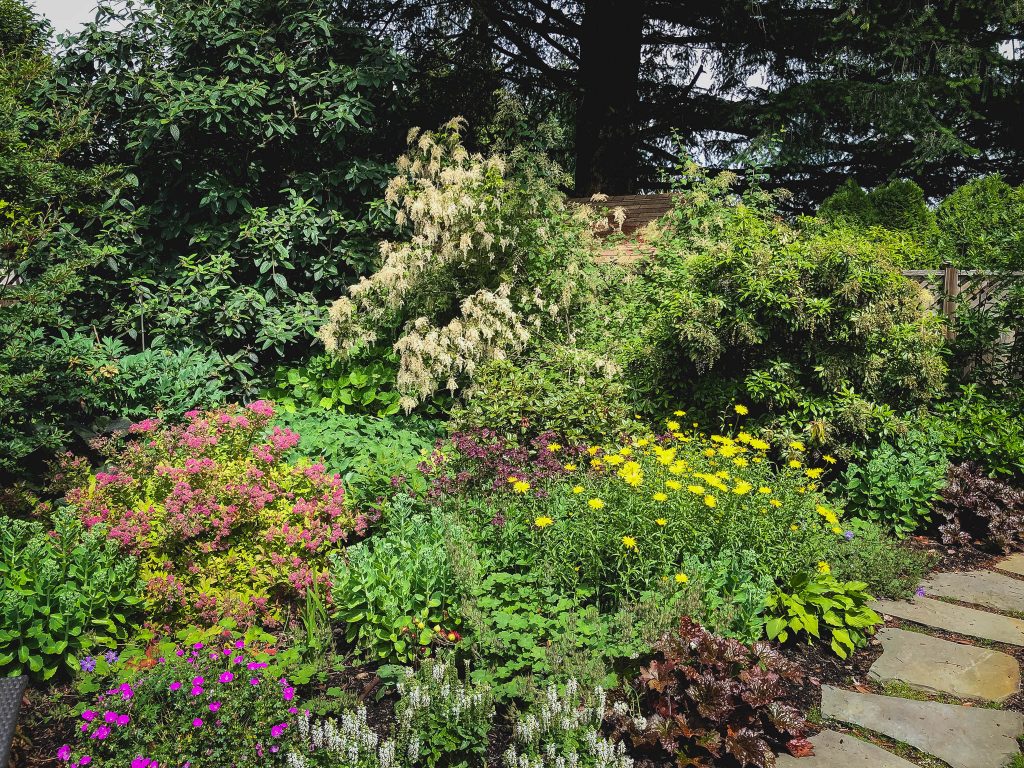
Image 1: Notice the variation in flower types: penstemon (pink, tube) campanula (purple, bell), geranium (fuschia, open); ground virgin’s bower and ocean spray in the back (white, lacy).
Image 2: The same garden from a different angle later in summer: black eyed susan (yellow daisy); crocosmia (orange, bell); turtlehead (pink, bilabiate)
Plant "easy access" flowers
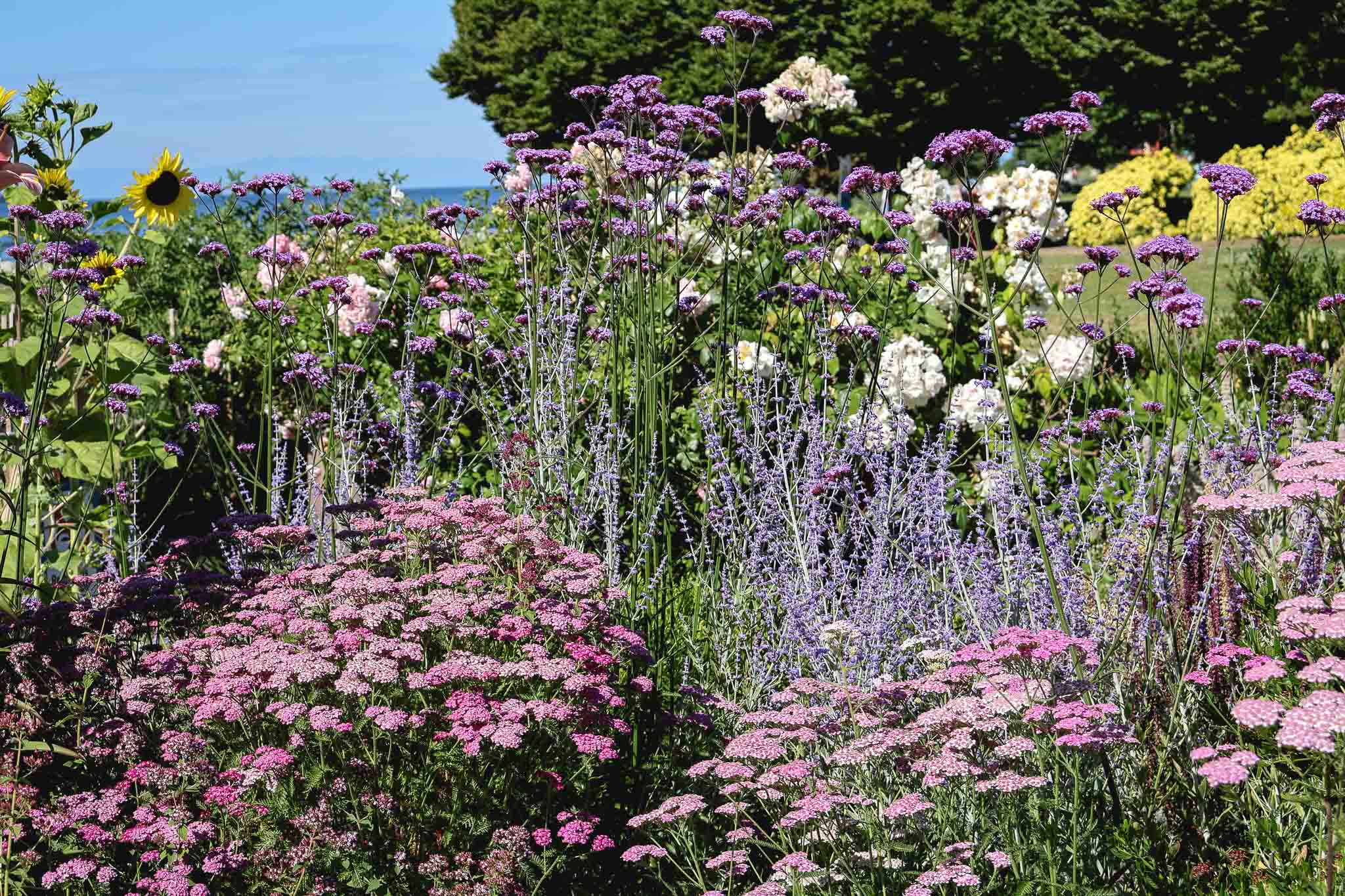
In general, “easy access” flowers where the pollen is visible will be attractive to more pollinators. A sunflower is more “easy access” than a lupine.
Image: This pollinator garden in West Vancouver includes lots of easy-access yarrow, as well as some sunflower and rose in the back.
Aim for large patches of each plant
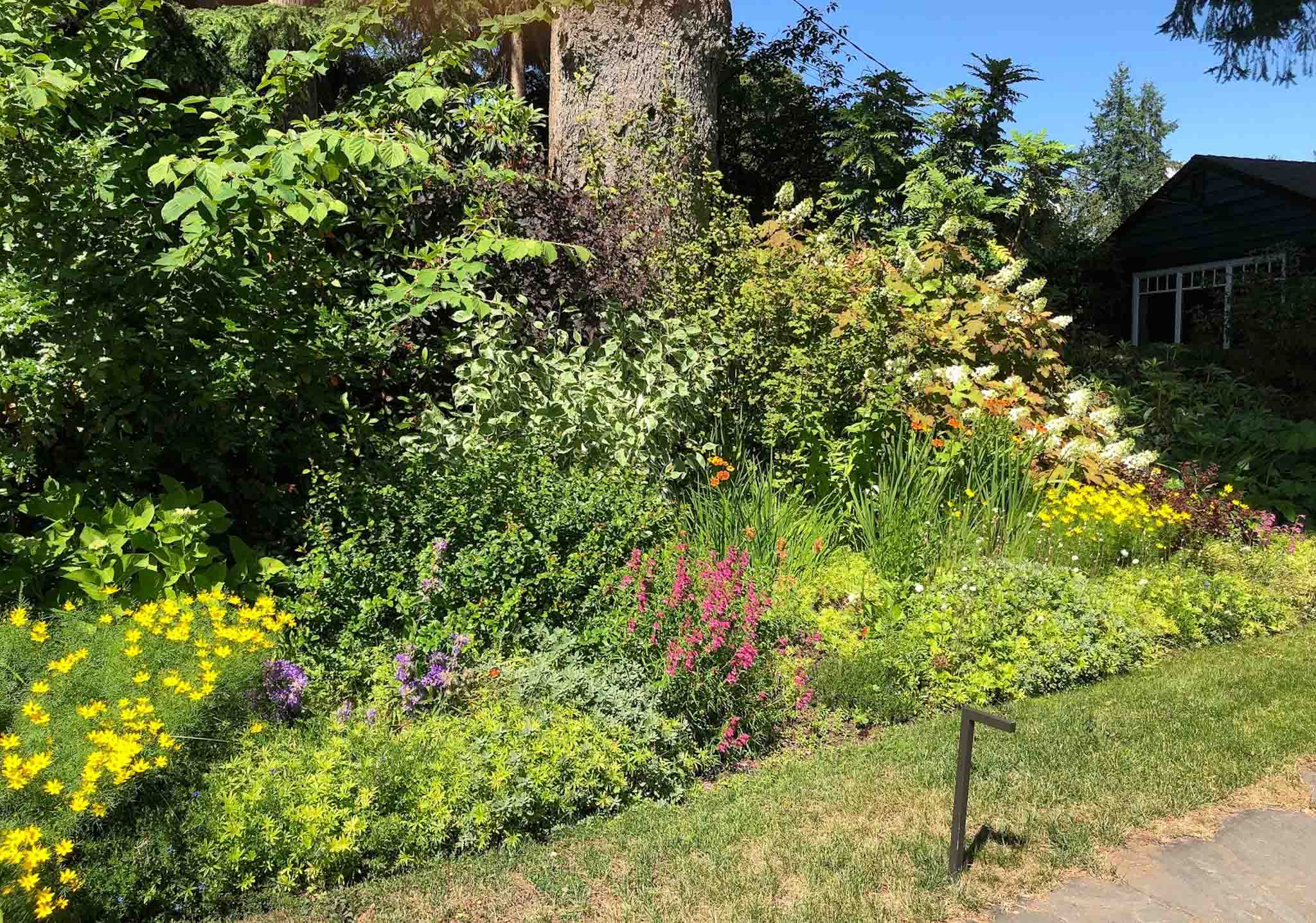
Aim for large patches of each kind of flowering plant—about a square meter of each, if you have space. Large patches mean pollinators are more likely to find (and learn how to use) the flowers.
Image: Long-blooming coreopsis (yellow) is repeated in large masses along this bed, and is common enough to attract the specialist sunflower bee Melissodes microsticta.
Don't Use Pesticides
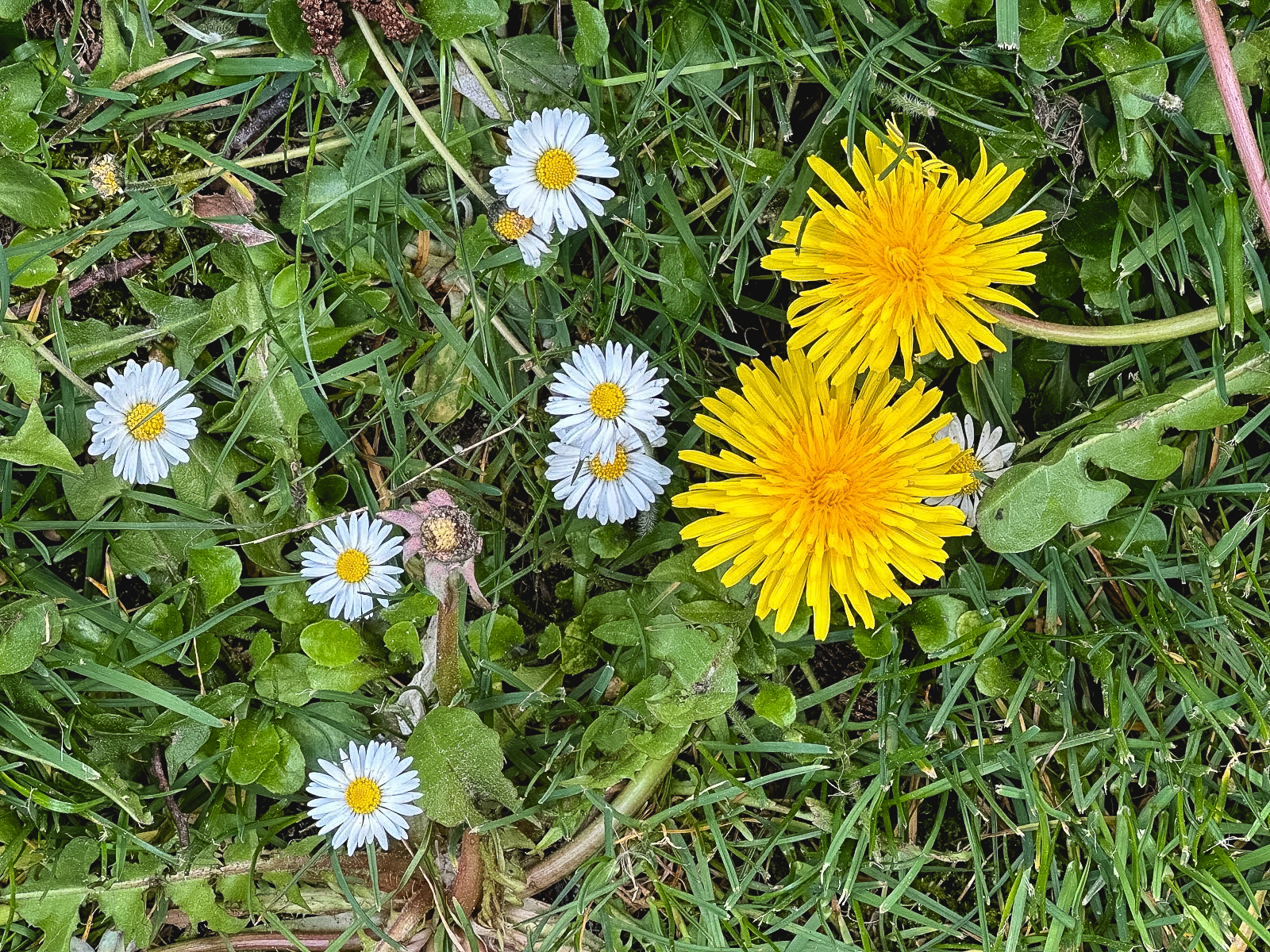
No pesticides, of course! And we encourage you to be forgiving of some ‘weeds’ like clover, dandelion, and English (lawn) daisies, as these are also food for bees.
Image: A lawn on a university campus includes weed species that support pollinators in early spring.
Consider nest sites
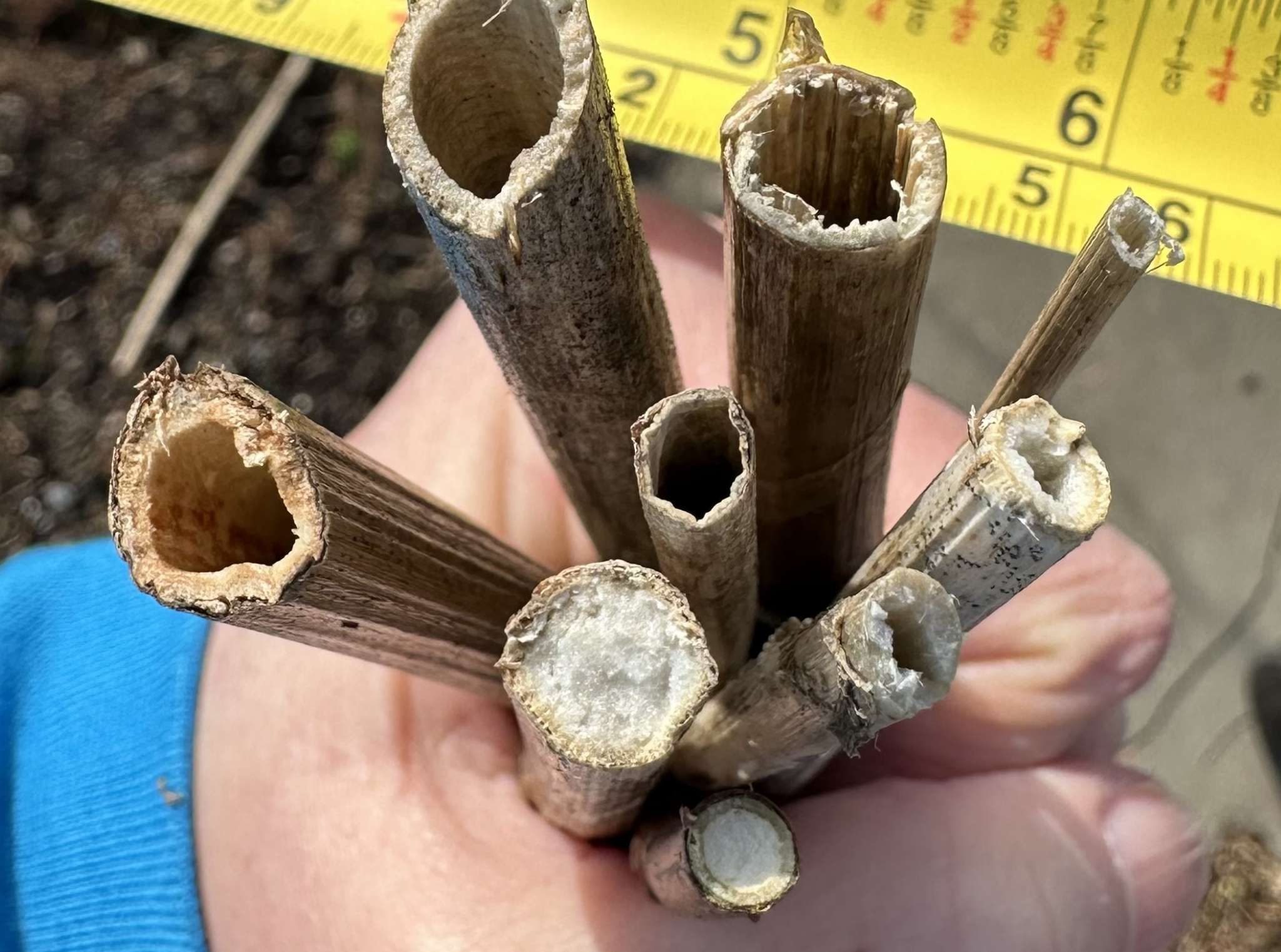
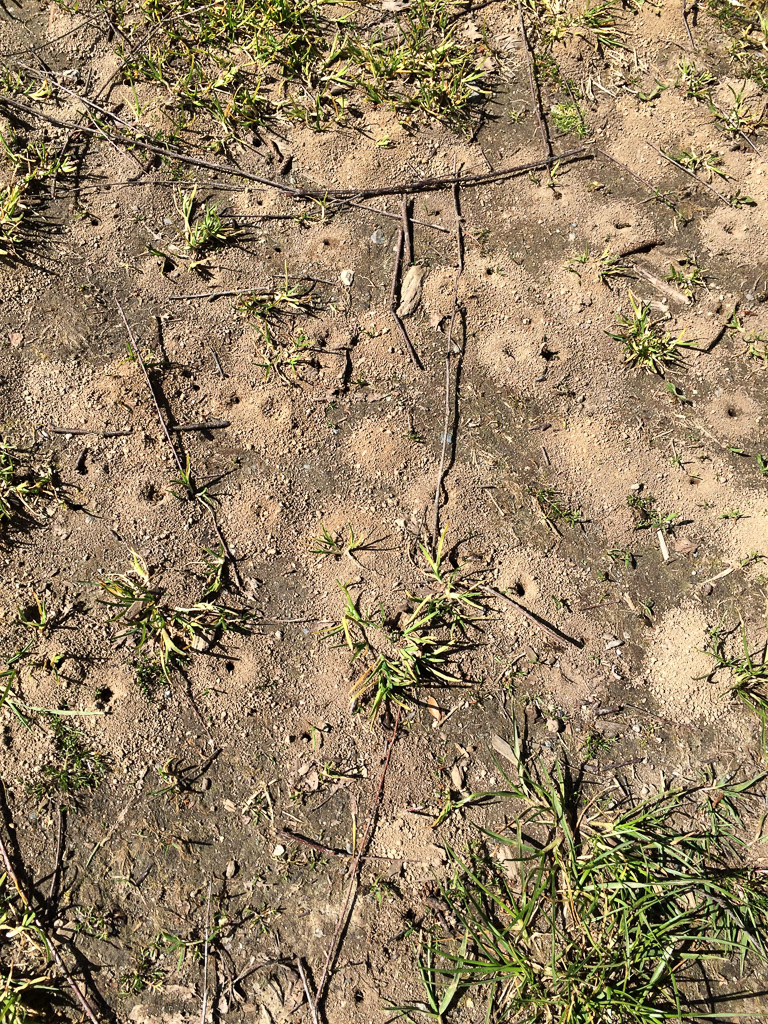
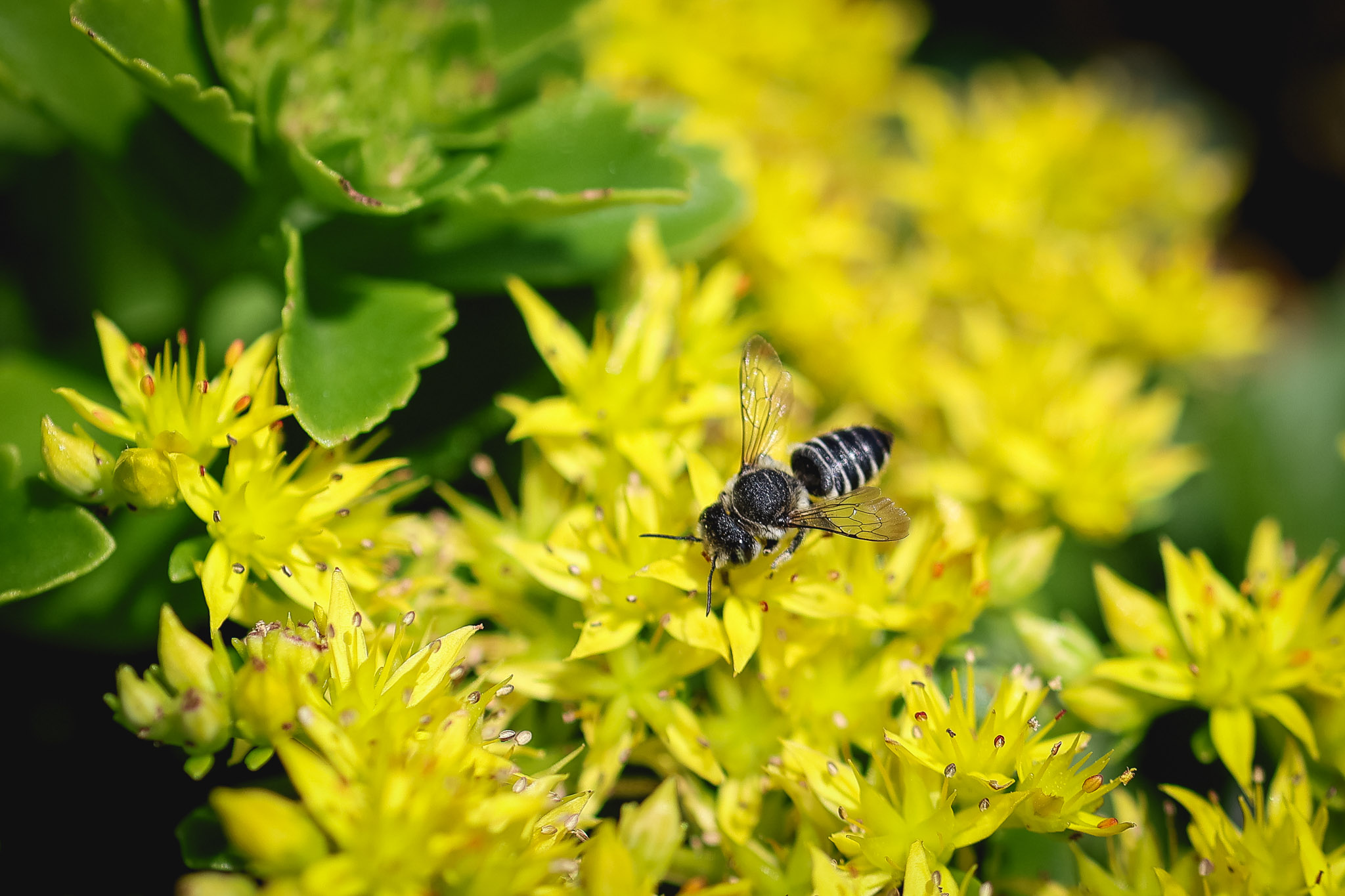
Consider growing plants with hollow stems, and accept the temporary presence of ground-nesting bees, or leaf damage by nest-building leafcutter bees. See information and images on our pollinators page.
Explore Our Research Data
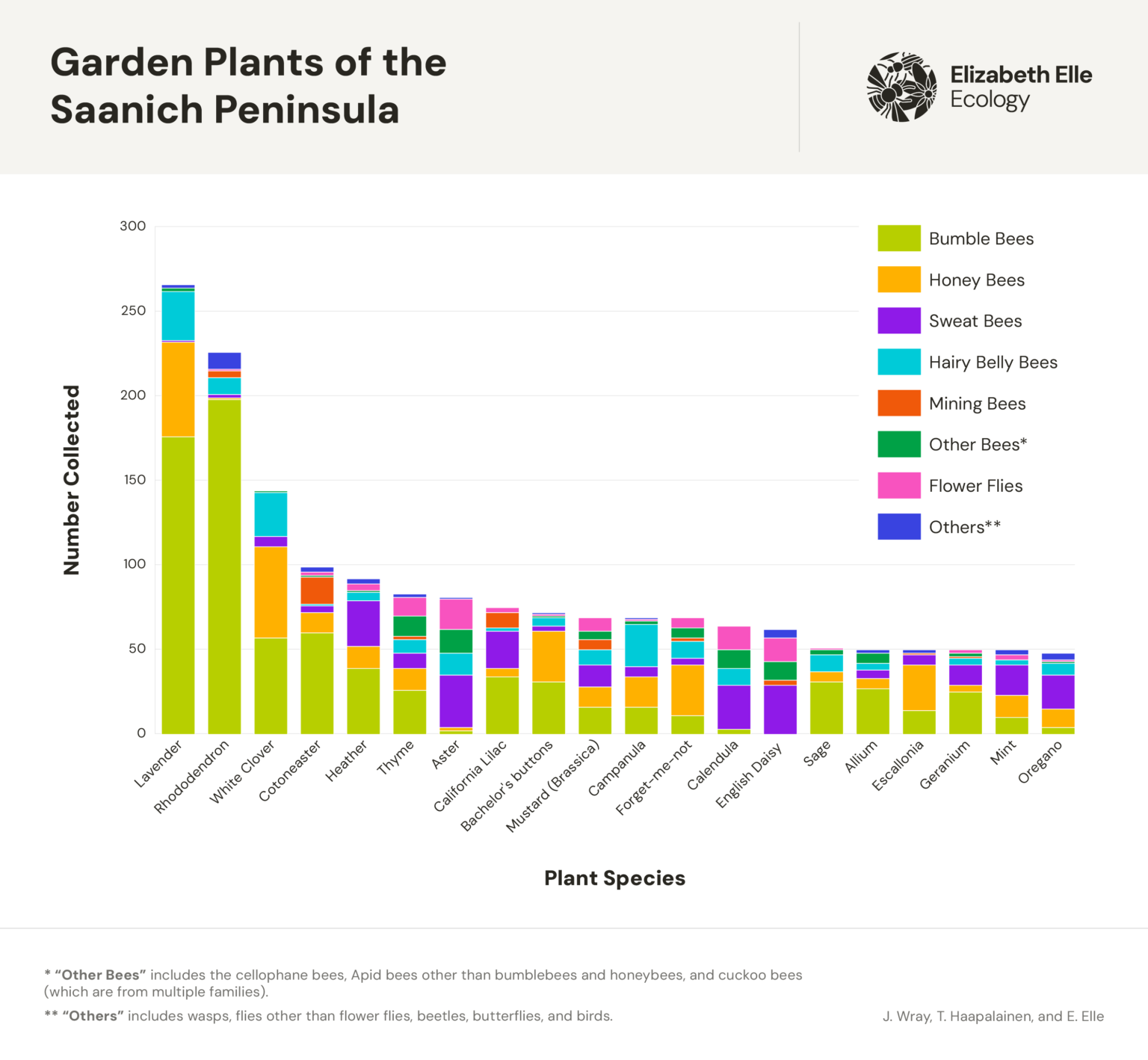
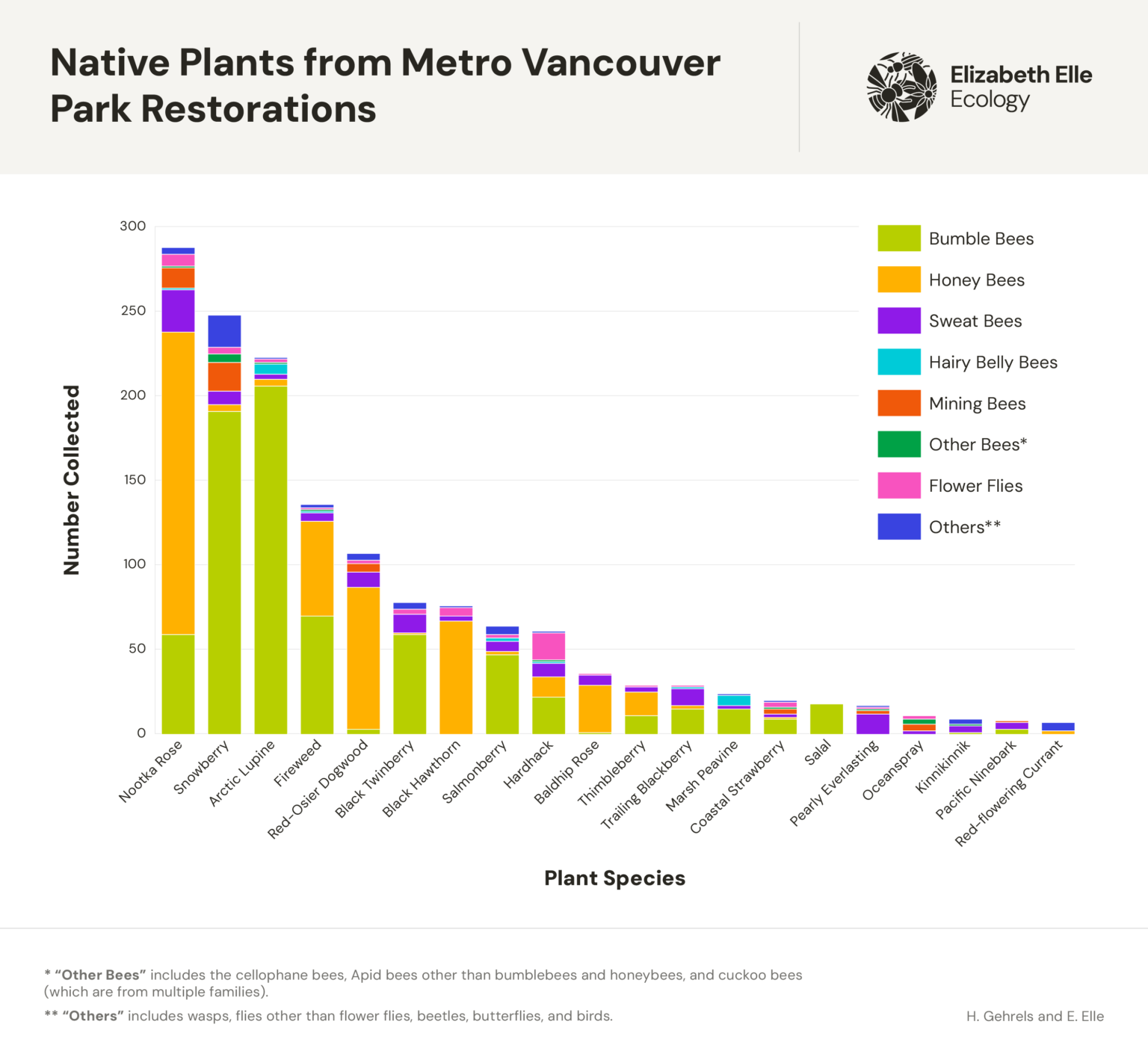
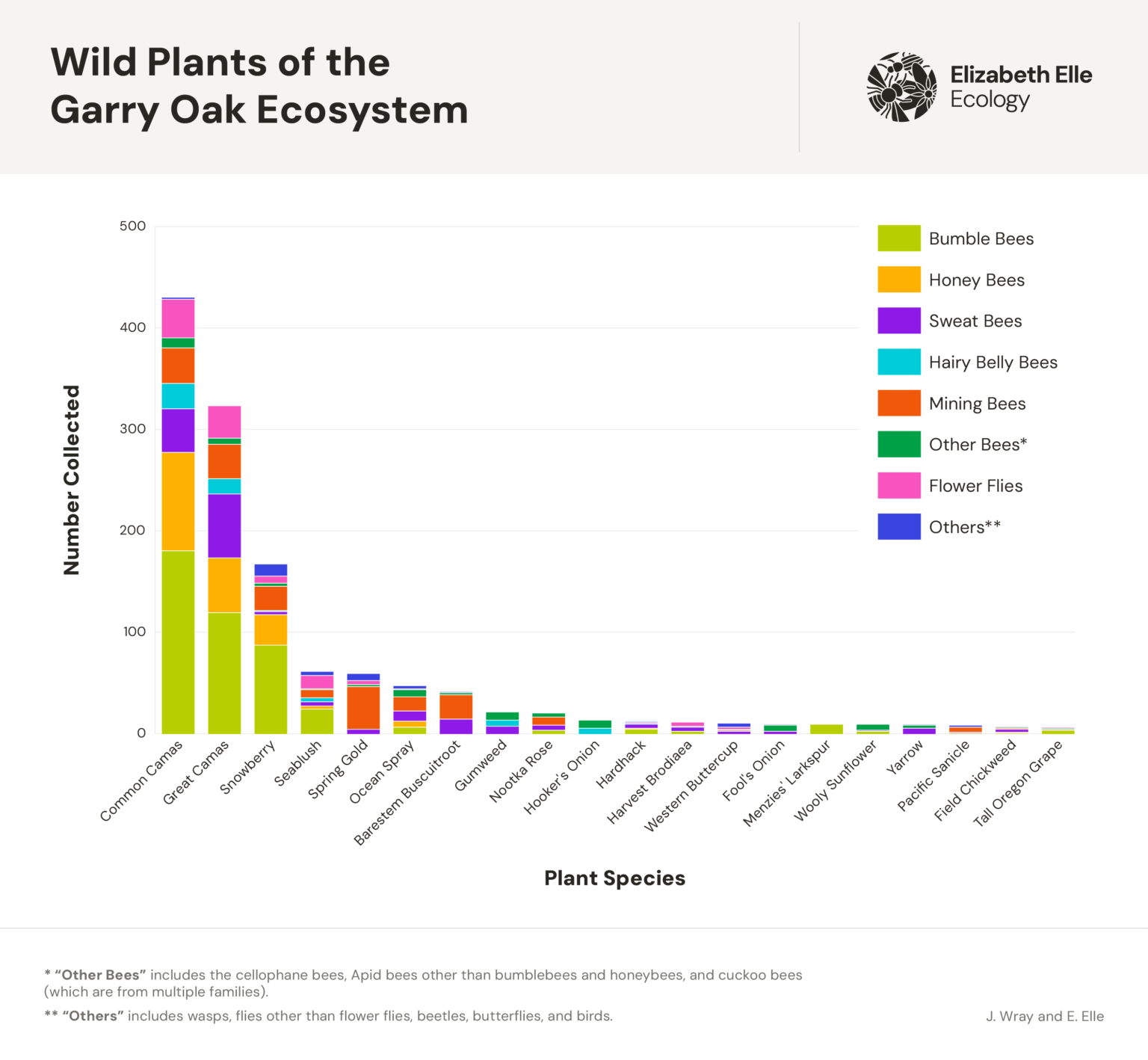
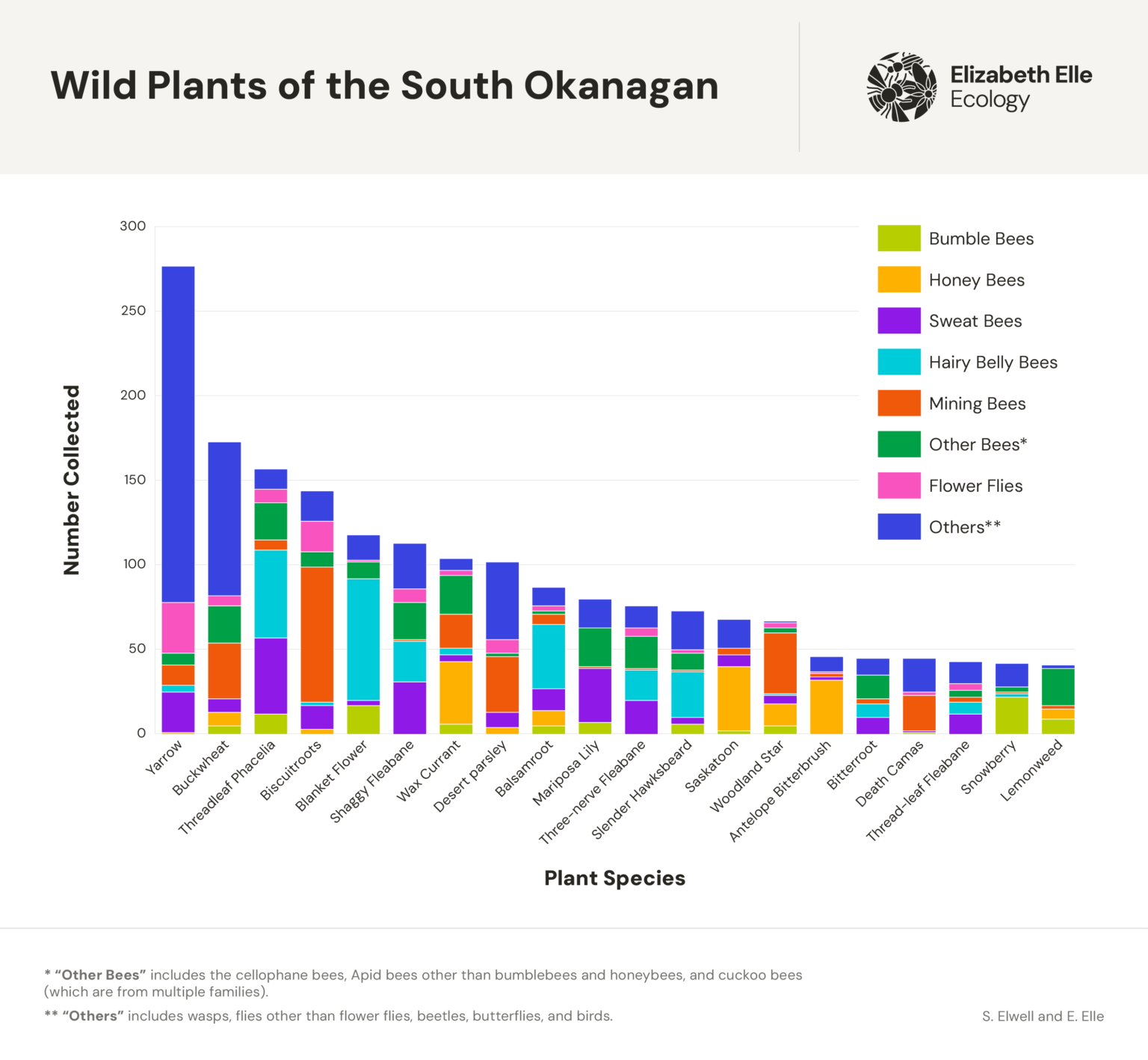
Discover pollinator-attractive plants for southern B.C.
The colours indicate pollinator type, and each bar is for a different plant. These “top-20” lists show which plants had really high visit rates by pollinators, and also useful is that bars with lots of different colours attract many different pollinator types. Note that the data hasn’t been standardized by flower number, so some common plants will be over-represented in our data.
In all cases the names of my amazing students who collected the data as part of their theses is indicated. Please be sure to leave these attributions on the graphs if you wind up using them!
Continue Learning